
Shit On My Slippers
Lessons on losing both dignity and control

It’s taken a while to write this piece because, if I’m honest, my nine-day hospital stay for major surgery and recovery was more traumatic than I let myself admit at the time. I’ve found it really difficult to write a straightforward narrative. So instead here are some of the things I learned along the way.
Note: it contains way more references to nasty bodily fluids than would normally be considered ideal.
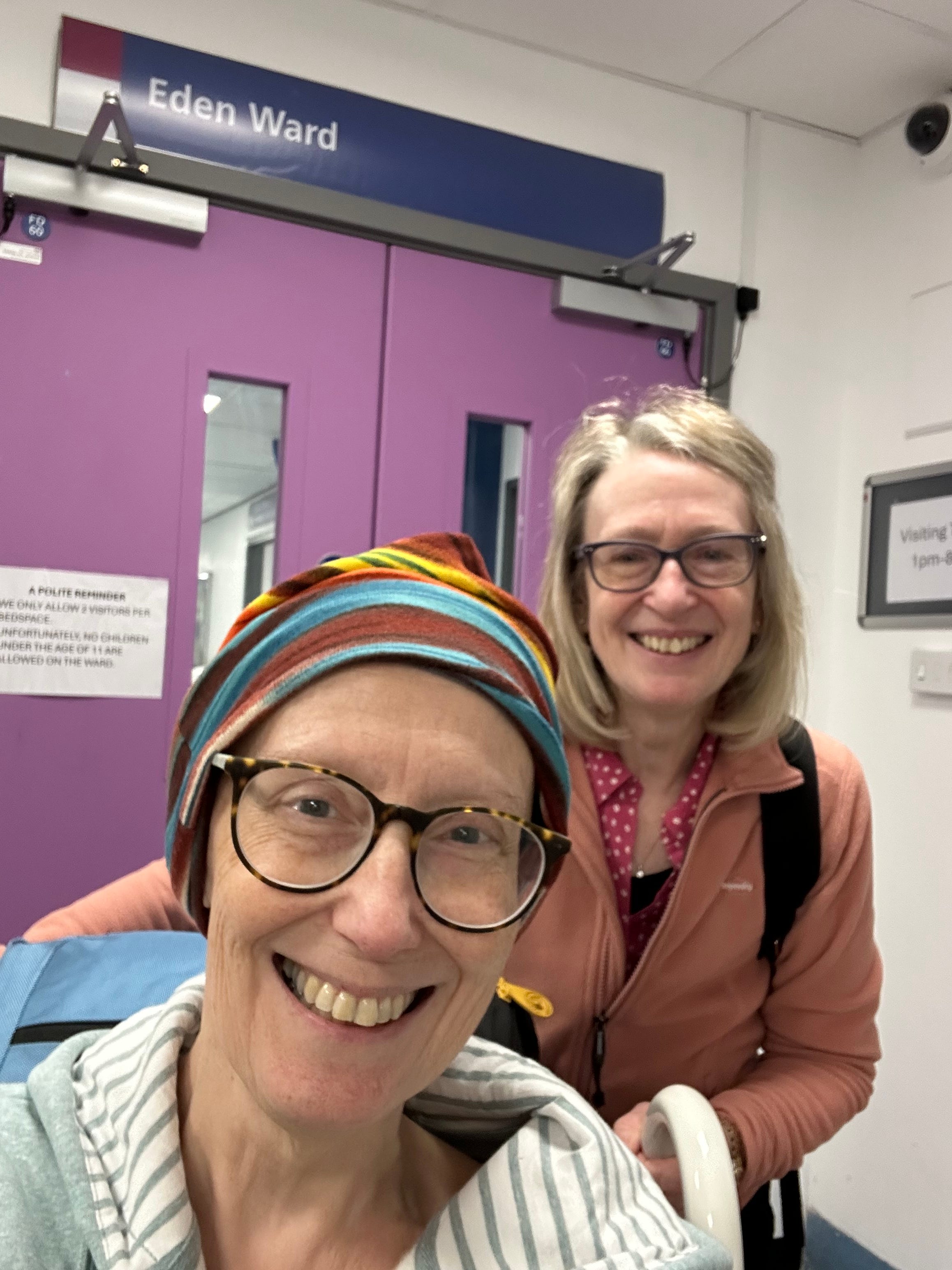
Escape from Eden: the best feeling in the world
Sometimes boring is good
My cheery yet brutally frank surgeon came to see me the morning after my operation. She confirmed they’d taken out all the expected bits (see last post) and my appendix (and why not.) But they’d managed to leave my spleen and didn’t need to do much to my bowels except scrape the cancer off the surface. All had gone well, she told me. Very straightforward. “I might even say run of the mill.”
I’m not motivated by much in life but probably my most important guiding principle is “never be run of the mill.” And for a brief moment I wished there’d been some kind of fascinating medical complication, the sort that gets written up in The Lancet. Then I reminded myself that in this case, it was good to be ordinary and predictable. But honestly: “run of the mill.” Ugh.
Nurses are obsessed with making you get out of bed
Yes, I get it. They need to get post-operative patients up and moving as soon as possible, even if they have a 34-centimetre surgical wound that vertically bisects their torso. On that first morning in the post-operative care unit, as she wrangled me, my catheter bag and my drip bag into the chair next to my bed, the nurse forgot that I would also need my call button. She was in the next cubicle forcing another poor sod out of bed when I felt my blood pressure completely plummet with a terrifyingly sudden slump. I spent the rest of the day on a drip, having my blood pressure taken at frequent intervals, obsessively watching the numbers slowly climb. But would they let me get back into bed? No, they bloody wouldn’t.
Don’t be arsey to nurses and health care workers
Even when I was pleading to get back into bed, I was polite. I was frequently taken aback by how rudely some patients spoke to them. These people are looking after you! Make friends with them. Learn their names, be interested in them. That goes for the housekeeping staff too: I discovered that if you asked nicely, the catering staff would bring you a bowl of Heinz Cream of Chicken soup even if it wasn’t on the menu, which proved invaluable during the time when I was throwing up litres of fluorescent yellow bile at the mere sight and smell of hospital food.
Note: it may occasionally be okay to be a little bit arsey to doctors in certain situations.
It helps to have somebody with you
I know. Who’d have thought it. My amazing sister drove from Hampshire to Cornwall and spent a week in a Premier Inn to be with me. Among the most important services she provided – a six-pack of Red Leicester Mini Cheddars, which were the only food I fancied other than chicken soup. In fact, I became so obsessed with them that when she finally took me home and gave me the last two remaining bags, I said: “Shouldn’t there be one more bag?” And she’d admitted she’d eaten one of them in her hotel room. She seemed surprised I’d kept such careful count.
Oh, and she bought me new slippers when I accidentally shat on mine. Two days in a row. More later.
You will never get a good night’s sleep in hospital
I kept having to tell myself: you can catch up on sleep when you’re home. Hospital beds aren’t designed for comfort. If you’re like me, you’ll keep playing with the settings and never quite find one that works – especially when the surgery means you need to sleep on your back.
Then there are the hospital noises – the infusion pumps creating a symphony of beeps with a challenging time signature.
And then there are the less predictable interruptions. I heard a terrifying story about an interloper who’d somehow got onto one ward the night before I was there, even trying to get into bed with one of the patients.
My worst night was spent on a ward with five elderly women who fell silent as my bed was wheeled in, like the clientele of The Slaughtered Lamb in American Werewolf in London. At 2am I was woken by one of the women complaining at length to the nurse in a peevish voice about some unspecified thing that had happened to her in front of the doctor, about her loss of dignity. Her bid for sympathy was undermined by her repeatedly asking the Filipino nurse if she understood English.
I later discovered that there is no dignity in hospital.
You will be woken up at stupid o’clock every morning
Usually this is fine. They’re there to take your obs (blood pressure, heart rate etc) and give you your drugs in a little paper cup. It has to be done, although good luck reciting your date of birth when you’ve just been roused from sleep.
Sometimes it’s great news – like when they woke me at 6am in the Slaughtered Lamb ward to tell me that a bed was now available in the gynae unit and they would be moving me immediately.
Sometimes it’s awful, like the time two doctors I’d never seen before came to my bed at 4am to tell me that a CT scan I’d had the previous day showed a post-surgery blockage in my bowels. It would need operating on, they told me, and I needed a naso-gastric tube fitted immediately in order to drain my stomach.
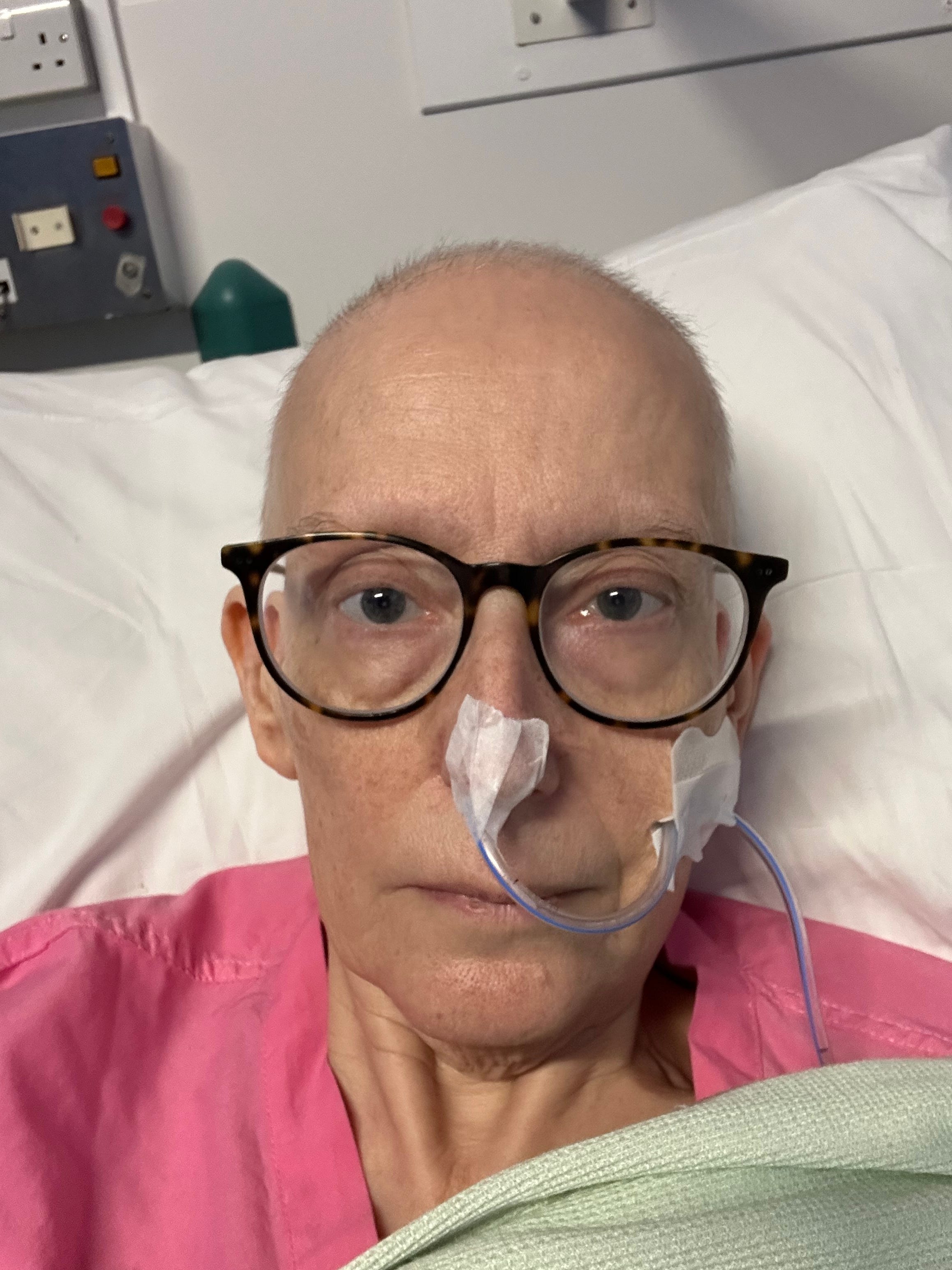
Furious.
Bowels are delicate creatures
Considering my cancer started in my ovaries, it’s extraordinary how much involvement my bowels have had. It was diarrhoea that first tipped me off that something was wrong. It was my bowels that my GP and I had focused on all summer: were they inflamed or “just” irritated?1
And it was my bowels that dominated the latter part of my hospital stay.
Usually after debulking surgery, constipation is an issue. So when my bowels started rumbling at 5am on my fifth day post-surgery, I was very happy. I made my way towards the toilets with as much speed as possible, farting as I went. It was only the cry of distress from a nurse at the desk that alerted me to the fact that I had followed through: I’d left a snail-like trail of runny poo all down the corridor and all over my legs and nightie and slippers.
Like I say, no dignity in hospital.
My sister brought me in a new pair of slippers from Tesco.
The following morning, I made it to the toilets, only to encounter a queue2. Where I proceeded to soil myself – and my slippers – all over again.
It’s why I ended up having a CT scan. It’s why they thought I had some kind of blockage in my bowels that was only letting liquid through. It’s why I got a tube put down my nose. It’s why I spent much of a day thinking they were about to reopen me and resect my bowel, leaving me with a stoma.
Eventually they decided it was probably something called an ileus. As one doctor explained, my bowels had been shocked by the surgery. And who could blame them? Rather than operate, they’d decided to “manage it conservatively” and wait and see what happened.
Going home is the best thing ever
For a while it looked as if they’d keep me in hospital until I did a solid poo.
But as I tried to explain to one doctor (and yes, here’s when I got a little bit arsey), that wasn’t going to happen in hospital given the state and paucity of the toilet provision and given the fact that I could only eat soft food because I had a tube down my throat. The only place my bowels would get better was at home.
Finally, it was agreed. Yes, I could go home the next day. Don’t eat too much fibre for a couple of weeks, they said. Call us if you haven’t done a big poo in the next few days.
Hurrah! My sister and I went down for a walk to the hospital canteen to celebrate.
That night I persuaded the on-duty doctor to take the tube out of my nose. I settled in for as good a night’s sleep as possible.
Until at 2am a nurse put me on a drip because apparently my potassium levels were low. Being on a drip meant it was trickier to move quickly in an emergency. Which is how I found myself shitting all over myself, my bed and my nightie (but thankfully not my slippers). A few minutes later, sitting on a commode next to my bed while the health care assistant cleaned up after me, I felt the lowest I’d felt at any point in hospital: utterly bereft of dignity and control, of myself and my bowels. Destined to stay in hospital forever until this thing cleared up. I had a little cry in the shower: so close to going home and yet so far.
The next morning I felt so guilty and rubbish about the whole thing. But the nurses were lovely. “Oh, not to worry. It happens. You were on a drip. Of course you couldn’t get out of bed.”
No one – the nurses or the doctors who were on rounds – seemed to think it was anything to worry about. They were all surprised that I thought it would stop me being discharged.
And so, at around 3pm, dressed in comfortable clothes and wearing the world’s most enormous Tena Lady, I made my exit and my sister drove me home, where she helped poo-proof my flat with extensive use of stick-on bed pads.
And I’m happy to report, for those who’ve made it this far, three days later I did a proper solid poo. I’ve never been so happy about my movements.
1If there’s any single point I’d like people to take away from reading my various blog posts, it’s that ovarian cancer symptoms can look an awful lot like IBS.
2Throughout my stay in Eden Ward at Treliske Hospital in Truro, a gynaecology and urology ward, two of the toilets were out of action – leaving just two cubicles for about eight to ten women, plus two for male urology patients. One of the doctors asked me if I would please put in an official complaint about it so I have, although two months later I’ve yet to have a response beyond a simple acknowledgement.
Well done, Jane, you got through a difficult stage in your treatment. Glad you are home now. I’m old enough to remember the time when we kept patients immobile for too long and some developed embolisms, which was, of course, really awful. But, also, as a patient, I know what you mean about having to get out of bed so soon. It’s the last thing you feel like doing.
It’s lovely that you were so considerate to the staff. I’m sure it was really appreciated.
Thank you so much for complaining re toilets. I hope you get a reply soon.
Thank you for sharing your experiences. My husband has stage 4 pancreatic cancer and there are so many poo stories that he could tell as well. Oy, and the surgery recovery is a doozy for sure!
My friend is a long-time stage 4 ovarian cancer survivor. Never lose hope! 🫶🏼